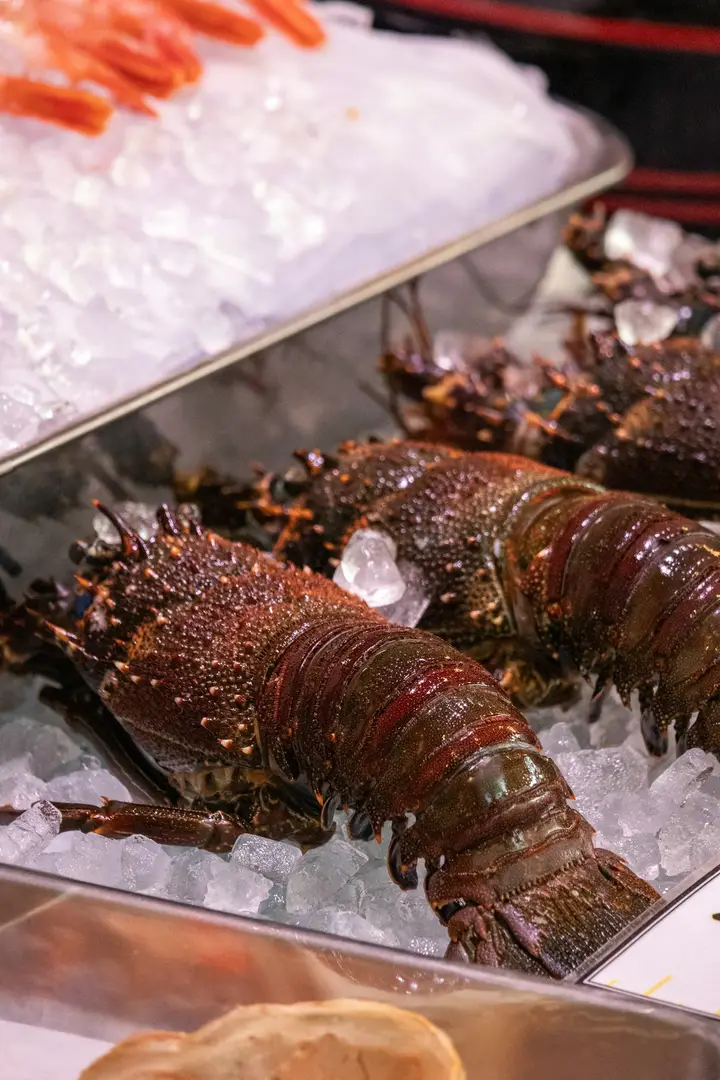
What MP means
You'll see it written as "MP", "Market price" or sometimes "MKT". It means the price follows what the restaurant is paying its supplier at the moment.
It's most common on seafood caught in the wild, like lobster, crab and some whole fish. Farmed chicken or beef usually costs about the same from week to week. A wild catch depends on the season and the weather. If the wind picks up and the boats come back early, there's less fish at the dock and the price goes up.
Curt Brown, a lobsterman and marine biologist at Ready Seafood, put it this way to TODAY:
"But when I see that label, I think of something that can change very quickly."
Why restaurants use it
Reprinting a menu every time the lobster price moves isn't realistic. MP lets the kitchen keep a dish on the menu and still charge enough to cover it.
Michael Billings, chief procurement officer at ButcherBox, told TODAY he doesn't see it as a trick: "I don't look at it as anybody trying to cheat," he said. "I think people are just trying to mitigate risk so they can maintain margins, which is totally logical for any business."
That's how it works on the owner's side. Guests often see it differently. Steven Wong, who owns a seafood distributor in New York, told TODAY that people ask him about market price "all the time". He added: "It takes me a while to explain to customers what it really means." Many people assume MP means "expensive" or "whatever we decide to charge."
Where it goes wrong: the unit
Sometimes the problem isn't the price itself. It's what the price is for.
In July 2026, the Daily Dot covered a TikTok video in which a guest at a restaurant in Saint Martin asked about a lobster's market price before ordering. She was told $38. The lobster came to $76 on the bill, because the $38 was per pound. "I asked, how much is the market price? She said, thirty-eight dollars. Not 38 a pound," she said. The manager adjusted the bill so she paid the $38 she expected.
That's one guest's account, and the Daily Dot couldn't check the billing details. But it shows how easily it happens. "Per pound" is obvious to staff and not to every guest.
How to keep guests' trust
- Use MP only where you need it. If a price moves a couple of times a year, change the number on the menu instead.
- Always say the unit. Per pound, per piece, per half dozen or per dish.
- Give a typical size or range. "Most lobsters are 1¼ to 1½ lb" lets someone do the math before they order.
- Tell staff the day's prices before service. Write them on the specials board or a note by the kitchen door, so every server says the same number.
- Say the price before the order, not after. If a guest doesn't ask, the server can still offer it: "The lobster is $26 a pound today, so about $35 for one."
- Charge what was quoted. If someone quoted the wrong price, honor it. A few dollars cost less than a bad review.
If you're a guest, asking is normal. Ask for today's price and whether it's per pound or per dish. A good server won't mind.
Write today's price, not "MP"
On a printed menu, MP is often the only practical option. A digital menu doesn't have that problem. If you can change the price in a minute, you can write "today $34" instead of MP and update it when the delivery comes in.
In Menupresso, a dish's price can be a number, a list of sizes, or a short line of text such as "Market price" or "$26 per lb". After you change it and save, the live menu shows the new price, and the link and QR code stay the same. If the lobster doesn't come in at all, you can hide the dish for the night without deleting it. If you update it before service, guests checking the menu on their phone see the same number your staff are quoting.