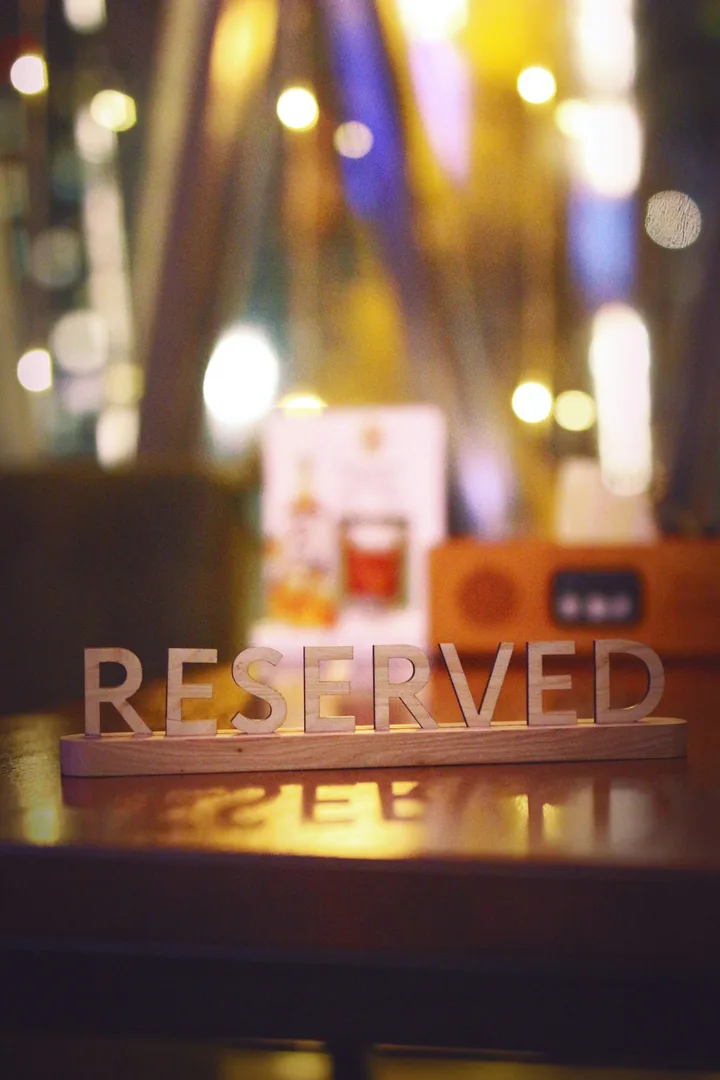
What reservations give you
- You know how busy you'll be. You can schedule staff and prep food for the night ahead, not guess.
- Planners can count on you. Birthdays, visitors from out of town and groups often book ahead. If you don't take bookings, some of them go somewhere that does.
- You can fill quiet times. Guests who see that 7:30 is full may take 6:00 instead.
- You see slow nights coming. A thin booking list on Thursday is a reason to post a special on Wednesday.
Chef Jason Neve, then at Batali & Bastianich Hospitality Group, put it this way to FSR Magazine: "the reservation not only helps the business be profitable, but it also sets up a great experience for the diner."
What reservations cost you
- No-shows. A table you held sits empty, the food you prepped may go to waste, and the server loses tips. In a room of 30 seats, one missing party of four is a big share of the night.
- Empty tables at the busiest time. A table held for a late guest can sit empty while walk-ins wait at the door.
- Time. Someone has to answer the phone, check requests and handle changes.
- Fees. Some booking services charge monthly or per guest. Restaurant consultant Jason Lapin told FSR: "If you do without, you cut out fees from OpenTable and the like, which is great as an operator."
When walk-ins only can work
Walk-ins only tends to suit places where guests eat fast and plenty of people pass by: cafés, counter service, bars and small-plates spots. It works best when guests don't mind a short wait.
In the same FSR article, Greg Pearce described how Over the Falls in Wake Forest, North Carolina, changed its policy as it got busier. Apart from one lunch booking a day for a group of 10 or more, and one early dinner booking between 5 and 6 p.m., the restaurant took walk-ins only. "We've doubled our business in the last year and a half, and once we identified and set the rules, we've had no issues," he said.
That's one restaurant, reported in 2016, and it had also moved to a new location, so the growth had more than one cause. The useful part is how clear the rules were. As Pearce said: "It's all about being consistent."
A mixed approach for small rooms
You don't have to choose all or nothing. Common middle paths:
- Book only part of the room. Take bookings for a set number of guests and keep the rest of the seats for walk-ins.
- Book only certain times. Take bookings for early or late sittings and keep peak hours for walk-ins, or the reverse.
- Book only groups. Take bookings for parties of six or more, where a held table matters most, and seat small tables as they arrive.
- Book only certain nights. Holidays, tasting nights and Saturdays, but not quiet weeknights. Our guide to holiday set menus covers the busiest of these.
Whatever you choose, write the rules down where guests will see them: on your booking page, your website and your Google profile. "We keep half our tables for walk-ins" saves a lot of awkward conversations at the door.
Ways to cut no-shows
You won't get no-shows to zero, but you can lower them:
- Make cancelling easy. Say on your booking page how to cancel or change. Cancelling should take one message, not a phone call in the middle of service.
- Check requests by hand when it matters. For big groups or busy nights, approve bookings yourself and call or text the day before.
- Ask for a phone number for larger bookings so you can reach the guest.
- Keep a short walk-in wait list so a no-show table can still be filled.
- Note repeat no-shows and ask those guests to call to book next time.
- Take deposits for high-risk nights. For holidays and large parties, many restaurants ask for a deposit. That needs a system that takes payments.
Questions to help you decide
- How many seats do you have? The smaller the room, the more each no-show hurts.
- How long do guests stay? Long dinners make bookings more useful. Quick meals make walk-ins easier.
- How many of your guests plan ahead? Tourists, groups and special occasions point toward taking bookings.
- Who will manage the list? Bookings need someone to check them before and during service.
If you're unsure, try bookings on two nights a week for a month. Compare covers, no-shows and how the room felt.
Menupresso has a free booking calendar, one per account. You set service hours, booking length, party sizes and a limit on how many guests can be booked at the same time. Set that limit below your total seats and you keep room for walk-ins. Bookings can be confirmed automatically or held for you to approve, and guests get an email either way. Telegram alerts are optional. Phone bookings can go on the same list. It doesn't assign tables, take deposits or send reminders, so for nights where you need a deposit, use a tool that takes payments. See what the booking calendar includes, or follow our step-by-step setup guide.