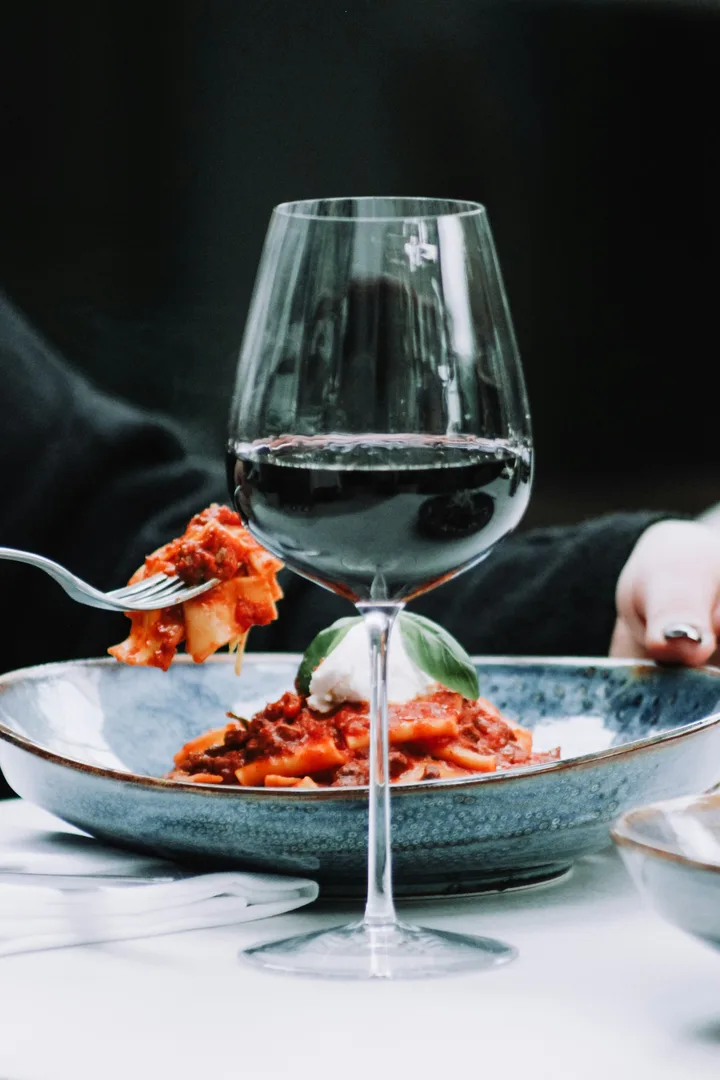
The courses, in order
Here's the full sequence, based on Wikipedia's overview of Italian meal structure. Menus usually use the plural as the section name, shown in brackets.
| Course | What it is | Typical dishes |
|---|---|---|
| Aperitivo | A drink before the meal, with small snacks | Spritz, prosecco, vermouth, olives, nuts |
| Antipasto (antipasti) | The starter, often cold | Cured meats, cheese, bruschetta, marinated vegetables |
| Primo (primi) | The first course, usually hot | Pasta, risotto, gnocchi, soup, polenta |
| Secondo (secondi) | The second course | Meat or fish: steak, chicken, sausages, salt cod |
| Contorno (contorni) | A side dish for the secondo, on its own plate | Roast potatoes, greens, salad |
| Dolce (dolci) | Dessert | Tiramisu, panna cotta, gelato |
| Caffè | Coffee after the meal | Espresso |
| Digestivo | A drink to finish | Grappa, amaro, limoncello |
A rough pronunciation guide: antipasti (an-tee-PAH-stee), primi (PREE-mee), secondi (seh-KON-dee), contorni (kon-TOR-nee), dolci (DOHL-chee).
Nobody eats all of it every day
The full run of courses is for special occasions. Wikipedia notes that today, full-course meals are mostly for events such as weddings, and "everyday meals include only a first or second course (sometimes both), a side dish, and coffee."
That matters for your menu. The sections tell guests what kind of dish each one is. They don't mean guests must order one from each. Guests can order two or three things, which matches how people in Italy eat day to day.
Where guests get confused
If your guests didn't grow up with this menu, three things trip people up.
The Italian section names. "Primi" means nothing to someone who has never heard it. Add a plain subtitle: "Primi · Pasta & risotto." You keep the Italian feel, and nobody has to ask.
Whether the secondo comes with anything. In the Italian layout, a secondo is the meat or fish alone. Vegetables and potatoes are contorni, ordered and priced separately. Many guests expect a main to come with sides. Say it on the menu: "Secondi are served on their own. See contorni for sides."
How big the pasta is. A primo is a course, but plenty of guests order pasta as their whole meal. Decide which it is at your restaurant, size it to match, and price it to match. If you offer two sizes, show both prices.
Adapting it for a pizzeria
A pizzeria doesn't need every course. A common layout:
- Antipasti: a few starters to share while the oven works
- Pizze rosse: pizzas with tomato sauce
- Pizze bianche: pizzas without tomato sauce
- Insalate: salads, which can double as the vegetable side
- Dolci: one to three desserts
- Bevande: drinks, with beer and wine first
"Rosse" (red) and "bianche" (white) are an easy way to split a long pizza list, but add a line explaining them the first time. If you also serve pasta, give it a "Primi" section between antipasti and the pizzas.