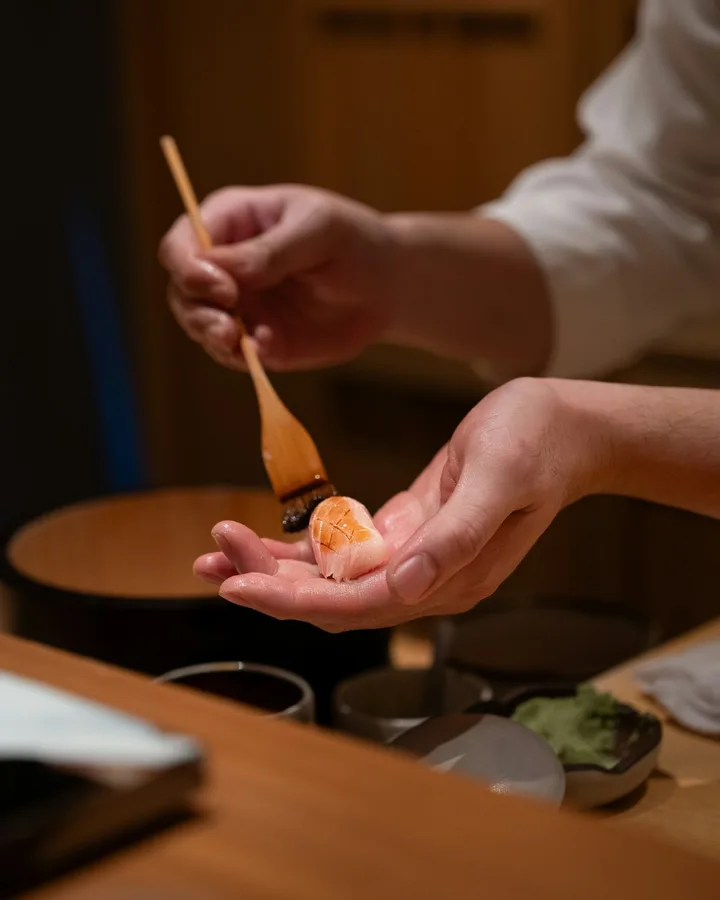
What omakase means
The word comes from the Japanese verb makaseru, "to entrust". The MICHELIN Guide explains it as "entrusting the chef to serve you what he deems best for the meal."
It's most closely linked with sushi, but the idea isn't limited to it. Some Japanese restaurants serve cooked dishes as omakase too. What makes it omakase is that the guest hands over the choice.
How it works at a sushi counter
The classic setting is a counter with a small number of seats in front of the chef. The chef makes each piece and puts it in front of the guest, who eats it straight away. The meal usually starts lighter and builds to richer fish.
Sukiyabashi Jiro in Tokyo describes it on its menu page: "we serve sushi in the 'omakase' style, where the order of the ingredients is decided and the sushi is served one piece at a time."
At many counters, the chef watches how guests react and adjusts as the meal goes on. Because the fish depends on what came in that day, the line-up can change from one day to the next.
The MICHELIN Guide also says the format can feel daunting: "Few dining experiences are as revered or as intimidating as omakase." A clear menu can take away some of that worry.
What guests want to know before they book
Look at how Sukiyabashi Jiro's menu page handles it. When we checked in October 2026, it showed:
- the format, in one sentence
- roughly how much food: "about 20 pieces"
- a starting price, including tax, and a note that "the amount will vary depending on the day's purchases"
- its cancellation policy
- a sample of the season's fish, marked as an example that "may vary depending on availability"
That covers the main questions before booking, and the same approach works at any price. Here's what to include on yours:
- Price per person. If it can change with the fish, say "from" and explain why.
- How much food. Number of pieces or courses, plus anything else included, such as soup or dessert.
- Seating times and length. Many counters seat everyone at the same time. Say "6:00 pm and 8:30 pm seatings, about 90 minutes" if that's how you run it.
- Allergies and raw fish. The MICHELIN Guide's advice to diners is to "Inform the restaurant of your allergies or any dietary restrictions." Tell guests how to do that and how much notice you need. Be honest about what you can't change at a sushi counter.
- Add-ons and drinks. If guests can order extra pieces after the set, or add a sake pairing, say so and show the price.