What does kaiseki mean?
Kaiseki (KAI-seh-kee) is two Japanese words that sound the same and are written differently. Wikipedia explains both:
- 懐石, "breast-pocket stone". This is the meal served before tea at a formal tea ceremony, also called cha-kaiseki. The name is often said to come from Zen monks who kept warm stones in the folds of their robes to ease hunger. The tea master Sen no Rikyū is thought to have given the meal this name.
- 会席, "gathering seat". This is a banquet meal of set dishes, where sake is the main drink.
The tea version is the simpler one. Washington and Lee University's Japanese tearoom guide calls it "a formal meal developed specifically for the tea gathering." The kaiseki most restaurants serve today is closer to the banquet style, and you'll see either spelling on their menus.
At a restaurant, the guest doesn't order dish by dish. Japan's national tourism site says: "The menu at a kaiseki restaurant is usually pre-determined."
What are the courses of a kaiseki meal?
The number of courses and their order change from one restaurant to the next. A dinner usually opens with a small appetizer and ends with rice and then dessert. In between, many kaiseki dinners include courses like these:
- Sakizuke: a small opening bite, similar to an amuse-bouche.
- Hassun: a platter of small seasonal bites that sets the theme. The name means "eight sun", an old unit, after the size of its square tray.
- Owan or suimono: a soup, often a clear broth, in a lidded bowl.
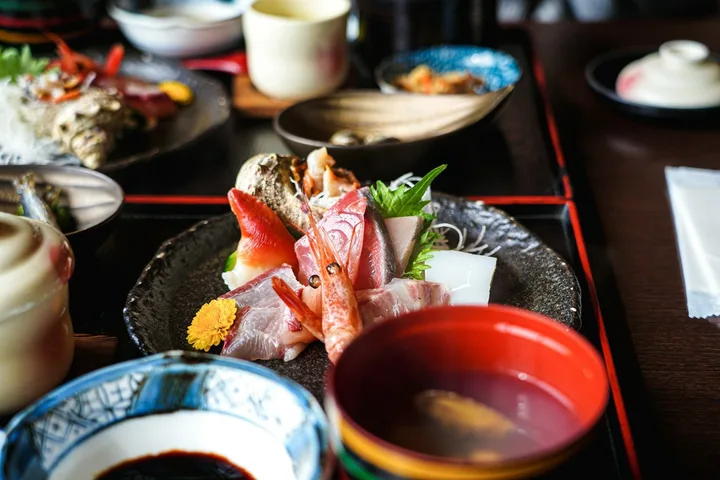
- Mukōzuke or otsukuri: seasonal sashimi.
- Yakimono: a grilled dish, often fish.
- Takiawase: vegetables with fish, meat or tofu, each simmered separately.
- Agemono or mushimono: a fried or a steamed course.
- Gohan, kō no mono and tome-wan: rice, pickles and miso soup.
- Mizumono: a seasonal dessert, often fruit.
The season is the heart of the meal. Wikipedia notes that "only fresh seasonal ingredients are used," and plates are chosen to match the season too. The MICHELIN Guide adds that some chefs plan around Japan's 72 traditional microseasons, not just four. Odo, a kaiseki restaurant in New York, says on its menu page: "Our menu evolves daily to reflect the hyper-seasonality of our ingredients."
Kaiseki vs omakase
Both are Japanese meals where the guest doesn't choose each dish, so they get mixed up. The MICHELIN Guide puts the difference in a line: kaiseki is a style of cuisine, and omakase is a style of service.
| Kaiseki | Omakase | |
|---|---|---|
| What it is | A set run of courses | Leaving the choice to the chef |
| Structure | Courses follow a known order | The chef decides as the meal goes |
| Food | Many cooking methods: raw, grilled, simmered, fried | Most often sushi, though not always |
| Setting | Often a private room or a table | Often a counter in front of the chef |
| Menu | Usually planned ahead for the season | Can change daily with the fish |
Odo describes kaiseki "with each course defined by a particular cooking method." That's a good test. If the meal moves through soup, raw, grilled and simmered courses in a planned order, it's closer to kaiseki. If the chef hands you one piece of sushi at a time and decides as they go, that's omakase.