How is it different from à la carte and table d'hôte?
| Menu du jour | À la carte | Table d'hôte | |
|---|---|---|---|
| Price | One price for the meal | Each dish priced | One price for the meal |
| Choice | Small, often two per course | The whole menu | Small, a choice per course |
| How often it changes | Daily | Rarely | Varies by restaurant |
| When | Mostly lunch | Lunch and dinner | Lunch, dinner or events |
An à la carte menu lets guests build their own meal from separately priced dishes. A table d'hôte menu is a full meal at one price with limited choice. A French menu du jour is close to table d'hôte; the difference is that it changes daily. If it repeats on a set weekly pattern, it starts to look like a cycle menu.
How French bistros use it
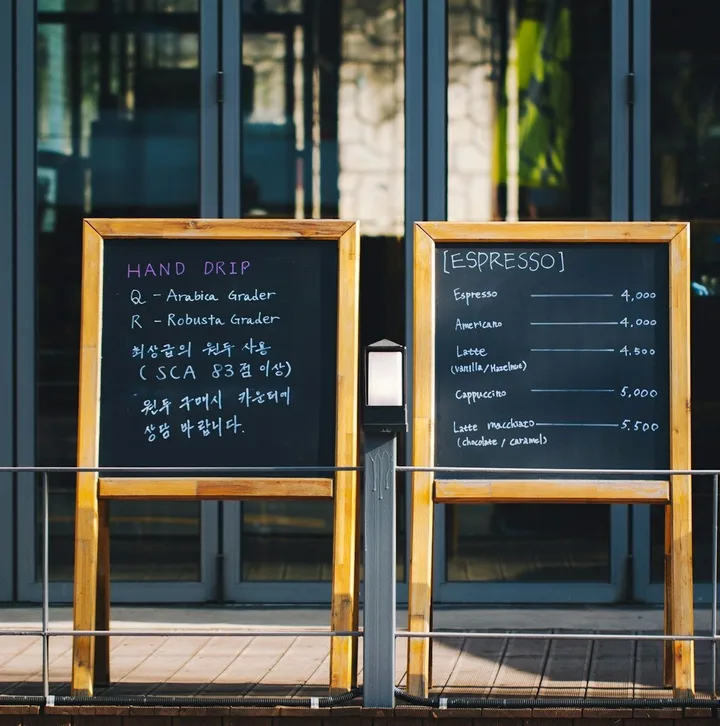
At lunch, many French bistros write the day's menu on a chalkboard, or ardoise. It's often sold as a formule: a starter and main, or a main and dessert, for one price, with all three courses costing a little more. As Fortune put it in a 2025 article on French lunch habits, "a set menu for a fixed price, a formule, is still a regular sight on French restaurant menus at lunchtime."
Watch one word if you borrow the French course names. In France, an entrée is the starter. In the US, the Cambridge Dictionary defines it as "the main dish of a meal." Write "starter" and "main" and nobody orders the wrong thing.
Sources
- Cambridge Dictionary, “du jour”
- Cambridge Dictionary, “entrée”
- Larousse, “menu” (French)
- Wiktionary, “menu du jour”
- Dictionary.com, “carte du jour” (Collins English Dictionary)
- Paul Brians, Common Errors in English Usage, “soup du jour of the day”
- Fortune, “Crisis on the menu: How cut-price deals and fast food are reshaping France’s sacred lunch ideals” (2025)